
Mining Engineering: Rewarding Yet Overlooked Career Choice

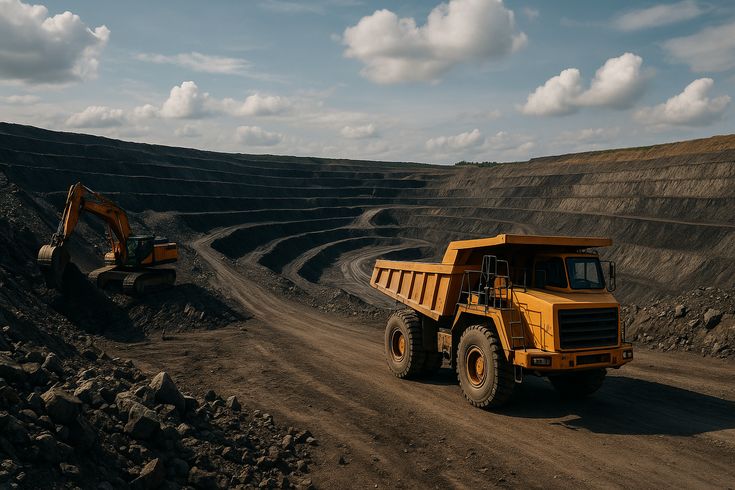
by Mohammad Muzammil, PhD candidate, IIT BHU
Ask most Indian students what a “good career” looks like and you’ll hear the same answers — IT, medicine, finance, data science, consulting. Mining? Rarely comes up.
Unless you’ve grown up near a mine or seen an excavator up close, mining as a career barely crosses your radar. That’s exactly what makes it one of the most overlooked, yet genuinely promising, career paths in India right now.
Why Mining Still Matters
Mining is one of the oldest industries in human history — and its relevance has never been greater.
Every economy depends on raw materials pulled from the earth. Manufacturing, infrastructure, technology, Defence — all of it starts with mining. The global mining industry accounts for trillions of dollars in economic value every year.
India is a mineral-rich country. Yet students barely consider it as a mainstream career path. The reason is simple: mining has traditionally been concentrated in states like Jharkhand, Chhattisgarh, Odisha, and Telangana. If you don’t live near mines or hear about them in local news, mining feels like something “others do.”
That’s starting to change.
What Does a Mining Engineer Actually Do?
Mining engineering isn’t just about digging holes. It involves:
- Mine planning and design — figuring out how to extract minerals efficiently and safely
- Production management — overseeing day-to-day operations at extraction sites
- Safety and compliance — ensuring operations meet regulatory and environmental standards
- Equipment and technology — managing machinery, automation systems, and digital tools
- Environmental management — handling sustainability, land reclamation, and community impact
Modern mining professionals are increasingly expected to integrate sensor data, geospatial mapping, and predictive analytics into their decisions — it’s not just about rock and soil anymore.
Specializations in Mining Engineering
Mining is broader than most students realize. You can build a career in:
- Coal and mineral mining (underground and surface operations)
- Geotechnical engineering (rock mechanics, slope stability)
- Mine ventilation and safety systems
- Environmental and sustainability management
- Drilling and blasting technology
- Mine automation and digital systems
- Mineral processing and beneficiation
And mining careers aren’t limited to engineers alone. Geologists, environmental scientists, safety managers, logistics specialists, and data analysts all have clearly defined roles in the modern mining ecosystem.
How to Pursue Mining Engineering After 10+2
Undergraduate Route (B.Tech/B.E. in Mining Engineering):
- Clear JEE Mains / JEE Advanced for IITs and NITs
- Clear state-level engineering entrance exams for state colleges
- Duration: 4 years
Postgraduate and Research Pathways:
- M.Tech in Mining Engineering or allied specialisations
- Qualify GATE (Mining Engineering paper) for PG admissions and PSU recruitment
- PhD programs for research and academia
Government Jobs Route:
- Qualify GATE → Apply for Management Trainee roles at Coal India Limited (CIL) and its subsidiaries
- This is one of the most direct pathways from engineering education into a core sector leadership role
Top Colleges and Institutes in India
IITs (Most Prestigious):
- IIT (ISM) Dhanbad — India’s premier institute for mining education, with historic roots in earth sciences and mineral engineering
- IIT (BHU) Varanasi — strong academic and industry connections
- IIT Kharagpur and IIT Bombay — programs and specialisations in mining and earth sciences
NITs and Other Reputed Institutes:
- NIT Raipur and NIT Rourkela — strong mining departments
- Indian Institute of Engineering Science and Technology (IIEST) Shibpur
- Various state engineering colleges in mineral-rich regions
These institutions offer undergraduate, postgraduate, and doctoral programs, along with campus placements in both public and private sector mining companies.
Skills Required
Technical skills matter, but so does a lot more:
- Core technical knowledge — mine planning, geology basics, explosives, safety systems
- Data and digital skills — geospatial mapping, sensor data analysis, predictive analytics
- Safety and regulatory awareness — critical for field operations
- Leadership and people management — you’ll be managing teams on the ground early on
- Problem-solving under pressure — field environments are unpredictable
- Environmental and community awareness — increasingly important for compliance and social license
Career Opportunities and Job Roles
Government Sector (Stable, Structured Growth):
- Coal India Limited (CIL) — world’s largest coal producer; recruits fresh graduates annually as Management Trainees via GATE; offers structured career progression, housing, medical benefits, and retirement plans
- Singareni Collieries Company Limited — major employer in Telangana
- Uranium Corporation of India Limited (UCIL) — new uranium mining projects in Rajasthan expected to generate thousands of jobs
Private Sector (Expanding Fast):
- Companies like the Adani Group are receiving new approvals for coal and mineral extraction — one recent coal mine approval in Nagpur district alone is expected to generate hundreds of direct jobs and thousands indirectly
- Opportunities in iron, bauxite, rare earths, industrial minerals, and value-added services
- Roles for mining engineers, geologists, safety specialists, project managers, and sustainability professionals
International Opportunities:
- Australia, Canada, and parts of Africa and South America have large, capital-intensive operations facing chronic skills shortages
- Experienced Indian professionals can and do transition into international assignments over time
Salary Insights
India (Government Sector):
- CIL Management Trainees start with competitive pay scales, housing, and benefits that make total compensation significantly higher than base salary alone
- Government roles also come with structured increments and retirement security
India (Private Sector):
- Entry-level roles vary, but experienced professionals in project management and safety command strong packages, especially in large private operations
International:
- Australia stands out — mining engineers and geologists command six-figure salaries (in AUD), driven by high commodity prices and high demand for expertise
- Canada similarly offers strong packages in both traditional and critical mineral mining
- Newcomers with engineering degrees and field experience can negotiate compelling packages in these markets
Future Scope: Why Mining Won’t Slow Down
The AI disruption argument doesn’t apply here the same way.
Many industries are being reshaped by automation — finance, software, customer support. Mining is being transformed too, but the majority of mining jobs involve complex physical environments, location-specific decisions, and safety-critical operations that require human oversight and field judgment.
This makes mining one of the least vulnerable sectors to full job displacement by AI, especially in India where automation penetration is still evolving.
At the same time, the industry is actively adopting:
- AI for geological data analysis and predictive maintenance
- Autonomous equipment operation
- Digital safety and environmental monitoring systems
This creates strong demand for hybrid professionals — people who combine core mining knowledge with skills in data analysis, AI integration, and geospatial systems. The future mining professional needs both field experience and digital fluency.
India’s infrastructure gap also works in mining’s favor. A significant portion of India’s mining infrastructure — from extraction sites to beneficiation plants to transport logistics — still needs to be developed and modernised. As India pushes initiatives around critical mineral exploration and skill development, the demand for trained manpower will only grow.
Is Mining Engineering Right for You?
Mining is worth seriously considering if:
- You want early responsibility — mining engineers handle real production decisions, safety compliance, and workforce management from the start, not years down the line
- You want job security without sacrificing growth — government mining jobs combine stability with scale; private sector roles offer fast-paced expansion
- You’re open to field work — remote assignments can be demanding, but they also accelerate professional development in ways that desk roles simply don’t
- You want less competition — mining is still under-promoted in mainstream career discussions, which means significantly fewer graduates chasing the same opportunities compared to IT or finance
- You’re thinking long-term — over time, professionals move into planning, corporate management, consultancy, regulatory roles, or international assignments
The world needs raw materials. Everything from the smartphone in your pocket to the electricity powering your home comes from mines. As global infrastructure investment grows and renewable energy systems expand, mining stays central to economic growth.
If you’re a student, parent, or professional exploring this field and want deeper guidance on colleges, entrance exams, or career pathways — feel free to connect and book a one-on-one session.




Responses