
???? How to Get Into an IIT

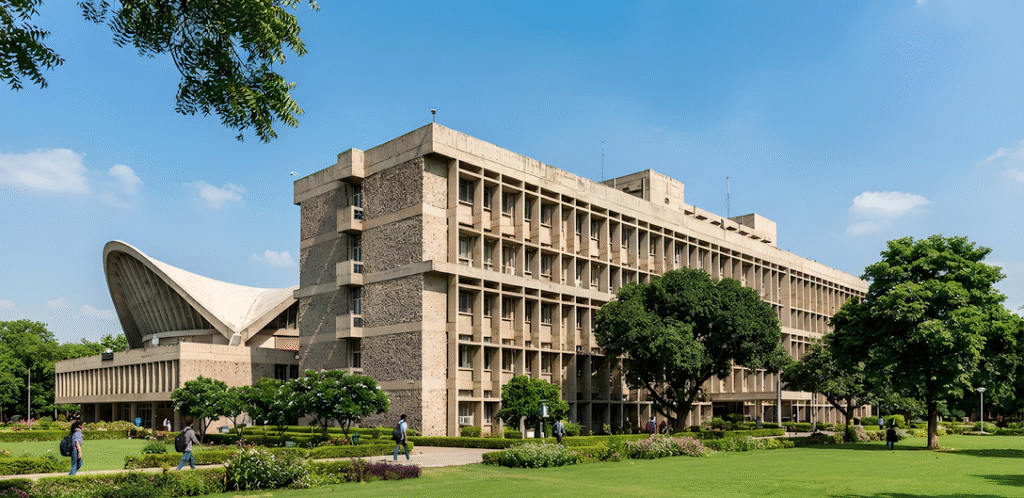
The Indian Institutes of Technology (IITs) represent the highest standards of technical education, research excellence, and innovation in India. For decades, they have been the dream destination for students aspiring to build impactful careers in engineering, technology, and research.
However, the path to IIT is often misunderstood. While many students associate IITs only with JEE Advanced, the reality is that multiple structured entry routes exist — especially at the postgraduate and research levels.
This guide provides a clear, honest, and complete roadmap to entering an IIT — whether you are a Class 12 student, a B.Tech undergraduate, a B.Sc graduate, or someone interested in research and higher studies.
PART A: Getting Into IIT After Class 12
For B.Tech Aspirants
The Only Entry Route: JEE Advanced
If your goal is to pursue a B.Tech or Dual Degree (B.Tech + M.Tech) at an IIT, there is only one legitimate pathway:
- JEE Advanced
- No lateral entry
- No management quota
- No transfers from other colleges
Step 1 — JEE Main Qualification
Appear for JEE Main. Only the top ~2.5 lakh candidates (category-wise) qualify for JEE Advanced.
Step 2 — JEE Advanced Examination
JEE Advanced evaluates:
- Conceptual clarity
- Analytical and problem-solving skills
- Application of Physics, Chemistry, and Mathematics
It is not a memory-based exam — it rewards deep understanding.
PART B: Getting Into IIT After B.Tech / B.Sc
For M.Tech, M.Sc, and PhD Aspirants
Unlike undergraduate admissions, postgraduate entry into IITs focuses on academic consistency, subject fundamentals, and research potential. Here are all the valid routes:
Route 1 — Direct M.Tech Admission (CGPA-Based Entry)
🎯 Who Is Eligible?
B.Tech graduates from CFTIs (NITs, IIITs, IIEST Shibpur, etc.) with a CGPA > 8.0. Cutoffs vary by IIT and department.
📝 Selection Process
- Technical interview (sometimes + written test)
- Core subject understanding
- Final-year project quality & internships
- Motivation for higher studies
⭐ Why This Route Is Powerful
- Avoids extreme GATE competition
- Rewards consistent academic performance
- Direct interaction with IIT faculty
Route 2 — Direct PhD After B.Tech (With Dual Degree & MS Exit Options)
A strategic and flexible route designed for research-oriented students.
🔬 Who Should Consider This?
- Students interested in research & innovation
- Those with strong academic backgrounds
- Students unsure about committing to a full PhD initially
🔄 How It Works
- Apply for Direct PhD after B.Tech
- Selection via Written Test, Interview, or sometimes GATE (not always mandatory)
- Complete coursework and begin research under a faculty advisor
🔓 Flexible Exit Options
💡 Key Advantages
- Early entry into IIT ecosystem
- Monthly stipend throughout
- Strong research exposure
- Low-risk due to exit flexibility
Ideal for careers in R&D labs, deep-tech startups, advanced industry roles, and academia.
Route 3 — Through the GATE Examination
The most popular and structured route to IIT M.Tech programs.
📚 What Is GATE?
A national-level exam testing core engineering subjects, engineering mathematics, and general aptitude.
🏫 Admission Process
- Appear for GATE and secure a competitive score
- Apply via COAP or individual IIT portals
- Selection through direct allotment or interview (department-specific)
✅ Why Choose GATE?
- Transparent & standardized process
- Financial support during M.Tech
- Score also valid for PSUs and PhD admissions
Route 4 — Through IIT JAM
IIT JAM (Joint Admission Test for M.Sc) is one of the most underrated routes to IITs — and one that very few students are even aware of until it's too late.
📚 What Is IIT JAM?
A national-level entrance exam conducted by IITs for admission to:
- M.Sc programs at IITs and IISc
- Joint M.Sc-PhD programs
- M.Sc-M.Tech dual degree programs
🎯 Who Is Eligible?
📝 Subjects Offered
🔄 Admission Process
- Appear for IIT JAM in your relevant subject
- Secure a qualifying score (cutoffs vary by IIT and program)
- Apply via JOAPS — JAM Online Application Processing System
- Admission offered based on merit and seat availability
⭐ Why This Route Is Powerful
- Opens the IIT door for B.Sc students who did not appear for JEE
- M.Sc from IIT carries strong brand value for research and industry careers
- Gateway to IIT PhD programs after M.Sc
- Less competition compared to JEE or GATE at equivalent opportunity level
🔓 Choosing the Right Path
There is no single "best" route — only the right route for you.
| Who You Are | Best Route |
|---|---|
| Class 11–12 student | JEE Advanced |
| High CGPA CFTI student | Direct M.Tech (CGPA Route) |
| Research-oriented student | Direct PhD / Dual Degree |
| Exam-focused aspirant | GATE |
| B.Sc student / B.Tech exploring science pathways | IIT JAM |
Common Myths About IIT Admissions
Getting into an IIT is not defined by a single exam or a single attempt. While JEE Advanced is the only gateway for undergraduate admission, postgraduate and research programs provide multiple structured and flexible pathways.
With the right awareness, preparation, and strategic planning, IITs are accessible to students from diverse academic backgrounds.
And for B.Sc students — IIT JAM ensures that your undergraduate degree is not a dead end, but a direct launchpad into the IIT ecosystem.
"IIT is not just an institution — it is an ecosystem that rewards curiosity, discipline, and purpose."



Responses